
Wednesday’s Wildlife: Northern Flicker

If you've ever noticed a bird hopping across your lawn, digging through the grass with a long beak instead of pecking at a tree, chances are you've met one of Southern Alberta's woodpeckers. The Northern Flicker is a common sight throughout Calgary and the surrounding region, though many people don't realise they're looking at a woodpecker at all.
Unlike many of its relatives, the Northern Flicker spends much of its time on the ground searching for ants rather than clinging to tree trunks. Its distinctive spotted belly, black crescent-shaped bib, and bright flash of yellow or red beneath its wings and tail can make it one of Alberta's most recognisable birds once you know what to look for.

These birds are more than just interesting backyard visitors; they play an important role in maintaining healthy ecosystems, supporting other wildlife, and helping control insect populations throughout Southern Alberta.
A ground-loving woodpecker
The Northern Flicker is one of the largest woodpeckers in North America, measuring between 30 and 35 centimetres long with a wingspan approaching 50 centimetres. In Alberta, we have two subspecies: the "Red-shafted" and "Yellow-shafted" Northern Flicker. The primary and namesake difference between these two subspecies is the colour of the shafts of their wings and tail feathers. Although both males and females share the same spotted plumage, males can be identified by the"moustache" stripe extending from the base of the bill, while females lack this marking.

While many woodpeckers spend their time foraging while standing on tree trunks, Northern Flickers are often seen standing on the ground. Their slightly curved bill, long sticky tongue, and powerful neck muscles make them highly specialised for finding insects hidden beneath the soil.
One of their most recognisable behaviours is "drumming." Like other woodpeckers, flickers rapidly strike hard surfaces to communicate territory ownership and attract mates. While trees are their natural choice, urban birds may also drum on metal chimney caps, gutters, roofs, utility poles, or even house siding because these surfaces amplify sound farther than wood does.
Although this behaviour can be startling or frustrating for homeowners, it is a natural form of communication rather than an attempt to damage buildings.
Where is home?
Northern Flickers are remarkably adaptable birds, and they continue to thrive across Calgary and Southern Alberta.
While they can be found in neighbourhoods, city parks, river valleys, campgrounds, open forests, and rural properties, they generally prefer habitats that combine scattered trees for nesting with open grassy areas where insects are abundant.
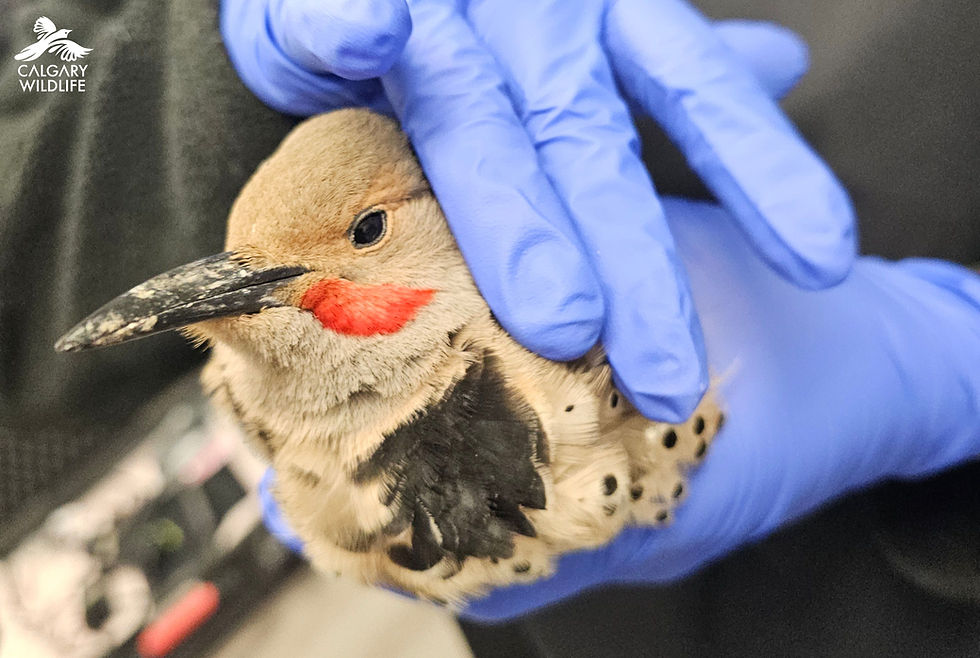
Unlike many woodland birds, Northern Flickers actually benefit from varied landscapes. They need standing trees for nesting cavities, but they also rely on open spaces to forage for ants. This combination of trees and grasslands makes much of Southern Alberta an ideal habitat.
Northern Flickers are also among the few migratory woodpeckers. They migrate south in the fall to spend the winter in the Southern United States or Central America, then return to Alberta in early spring.
Nature’s pest control
Northern Flickers have one of the most unusual diets among North American woodpeckers.
Rather than specialising in wood-boring beetles hidden inside trees, flickers consume enormous numbers of ants. In fact, ants can make up the majority of their diet during the breeding season. Using their long tongue, they reach deep into anthills to collect insects and larvae.
Their saliva is naturally sticky, allowing hundreds of ants to adhere to the tongue in a single feeding session.
In addition to ants, flickers eat beetles, flies, caterpillars, grasshoppers, crickets, termites, spiders, and other invertebrates found on or beneath the ground. During late summer and fall, when insects become less abundant, they supplement their diet with berries, seeds, and occasionally fruits.
For homeowners, this feeding behaviour provides an important ecological service. By naturally consuming thousands of insects, Northern Flickers help regulate insect populations without pesticides.
Forest engineers
Beyond pest control, Northern Flickers are also considered ecosystem engineers because of the nesting cavities they excavate. With a new mating season, male and female Northern Flickers either excavate a new nesting cavity or reuse an old one from previous years.
Once the breeding season has ended, these abandoned cavities become valuable homes for dozens of other species that cannot excavate their own nests.

Tree swallows, mountain bluebirds, chickadees, nuthatches, flying squirrels, small owls, and several species of ducks all depend on abandoned woodpecker cavities for nesting or shelter.
Without cavity-creating birds like Northern Flickers, many other wildlife species would struggle to find suitable nesting sites.
Young flickers
Northern Flickers typically begin selecting nest sites shortly after returning to Alberta in the spring.
Both males and females work together to excavate a fresh nesting cavity, usually in a dead or partially decayed tree, or to return to a used one that they or another species excavated in previous years. Unlike most woodpecker species, Northern Flickers don't always excavate new nesting cavities.
Young flickers grow quickly, relying entirely on their parents to bring a constant supply of insects back to the nest. After several weeks, the fledglings leave the cavity but continue to follow their parents as they learn to forage independently.
Seeing a young flicker on the ground during summer does not necessarily mean it has been abandoned. Fledglings (baby birds with feathers) commonly leave the nest before they are fully proficient at flying, while their parents continue to feed and protect them nearby.
If the bird appears alert, has feathers covering most of its body, and is hopping or fluttering, it is usually best to observe from a distance and keep pets and children away. However, if a bird is visibly injured, has been caught by a cat or dog, or is in immediate danger, contact Calgary Wildlife for guidance before intervening.
Predators and challenges
Like many birds, Northern Flickers face a variety of natural threats throughout their lives. Eggs and nestlings are vulnerable to predators such as squirrels, snakes where present, raccoons, and other animals capable of accessing tree cavities. Adult flickers must also remain alert for aerial predators including Cooper's Hawks, Sharp-shinned Hawks, Merlins, and Great Horned Owls.
Fortunately, their behaviour helps reduce some of these risks. Their feathers provide excellent camouflage against tree bark and leaf litter.

Even with these natural adaptations, survival can be challenging, especially for young birds experiencing their first migration or learning to forage independently. Natural predation is an important part of maintaining healthy ecosystems, but today, Northern Flickers also face an increasing number of human-related threats.
Coexisting with humans
Northern Flickers have adapted remarkably well to urban environments like Calgary, but city life comes with its own set of challenges.
One of the most common concerns homeowners have is the loud drumming sound flickers create during spring. Unlike pecking for food, drumming is a form of communication used to establish territory and attract mates. Flickers choose surfaces that produce the loudest, clearest sound, like metal chimney caps, gutters, roof vents, utility poles, or the wooden siding of homes.
Although repeated drumming can occasionally leave small holes or cosmetic damage, it is important to remember that the bird is not attempting to destroy a building. Instead, it is simply responding to its natural instincts during breeding season.
If a flicker repeatedly drums on your home, wildlife experts recommend humane deterrents. Northern Flickers are protected under the revolutionary Migratory Bird Act, and it is strictly illegal to harm, capture, or kill Northern Flickers, as well as to disturb, destroy, or move their nests and eggs. Covering particularly attractive surfaces, temporarily hanging reflective streamers or visual deterrents near the drumming site, or reducing access to favourite perches can encourage the bird to move elsewhere without causing harm.
Human-caused risks
While Northern Flickers are strong fliers, glass presents one of the greatest dangers they face in urban environments.
Large windows often reflect trees, shrubs, or open sky, making them appear to be safe flight paths. As a result, flickers and other birds can collide with glass at high speeds, often suffering concussions, broken bones, or fatal injuries.
Window collisions occur year-round but are especially common during spring migration, when birds are establishing territories, and again in late summer and fall, when young birds are dispersing and migrating south.
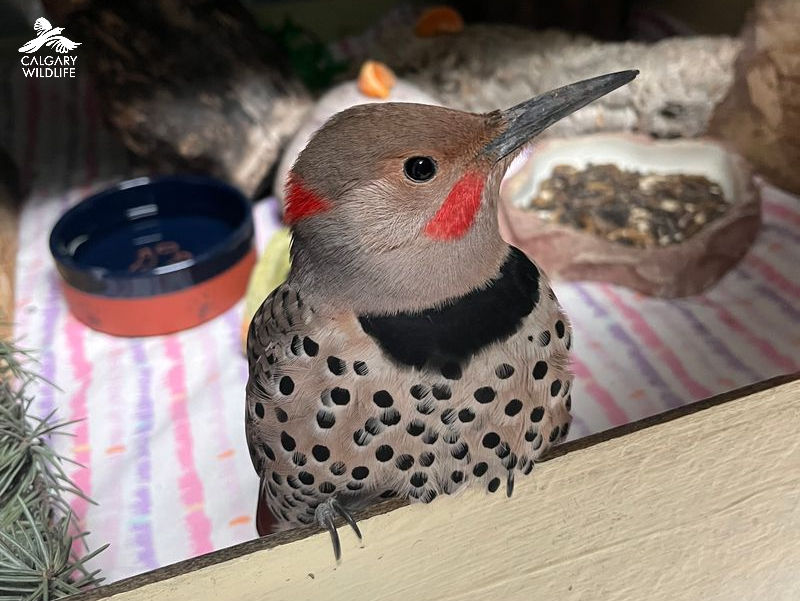
Fortunately, homeowners can make a significant difference by making windows visible to birds. Applying exterior window markers, decals, specialised films, or tightly spaced patterns helps birds recognise glass as a solid barrier. Closing blinds during peak migration or reducing indoor lighting at night can also decrease collisions.
Simple changes around the home can save countless birds every year. With Northern Flickers spending time feeding on the ground, free-roaming cats also pose a threat.
Even well-fed cats use their natural hunting instincts. A single outdoor cat can injure or kill numerous birds over the course of a year, including fledgling flickers that are still developing their flying abilities.
Keeping cats indoors, supervising outdoor time with a leash or in an enclosed "catio," or providing enriching indoor environments not only protects wildlife but also keeps cats safer from vehicles, predators, disease, and injury outdoors.
Pesticide use is also another hidden risk. Because flickers rely so heavily on ants and other insects, reducing insect populations through pesticide application can decrease the amount of food available. Birds may also be exposed indirectly by consuming contaminated insects.
Maintaining healthy lawns without unnecessary pesticide use helps support both Northern Flickers and the many other insect-eating birds that call Southern Alberta home.
How to help
Although Northern Flickers are resilient birds, they may require assistance at times.
A bird that has collided with a window may appear stunned, quiet, or unable to fly. Others may be found with visible injuries, drooping wings, or evidence of a cat or dog encounter.
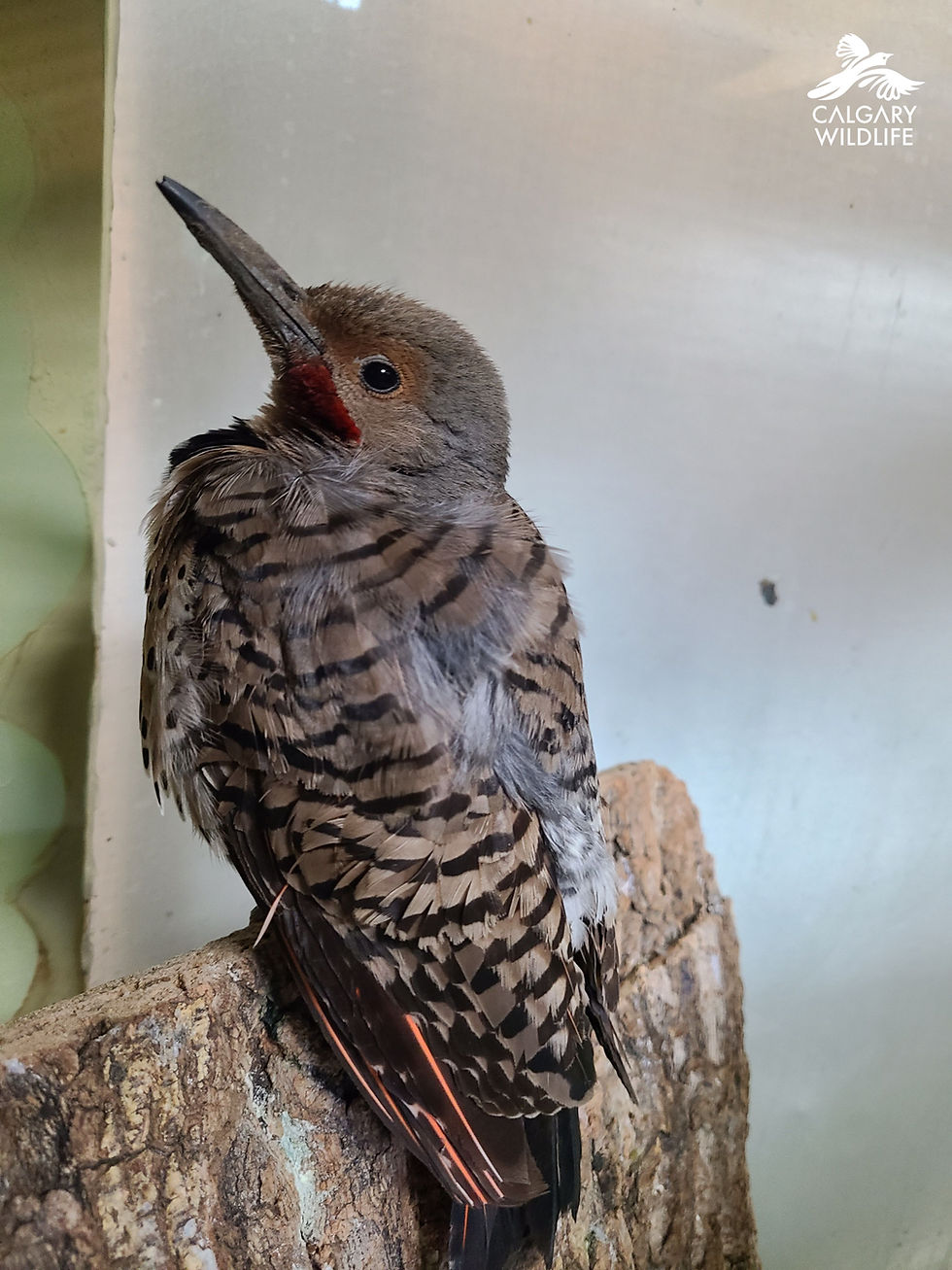
If you encounter a distressed or injured flicker, contact Calgary Wildlife as soon as possible for further instructions.
Small bird, big impact
Northern Flickers are far more than colourful backyard visitors. They are natural pest controllers, skilled excavators, and important ecosystem engineers whose nesting cavities support a remarkable diversity of wildlife throughout Southern Alberta.
Their presence reminds us that healthy urban environments depend on more than manicured parks and tidy neighbourhoods. Mature trees, native insects, natural nesting sites, and safe spaces for wildlife all contribute to vibrant communities where both people and animals can thrive.
Whether you spot one probing your lawn for ants, hear its unmistakable drumming echo through the neighbourhood, or catch the bright flash of yellow beneath its wings as it flies overhead, the Northern Flicker offers a glimpse into the incredible wildlife living alongside us every day.
For assistance with injured wildlife, please contact the Calgary Wildlife Rehabilitation Society at 403-214-1312.
References
Alberta Institute for Wildlife Conservation. (n.d.). Meet the Northern Flicker. https://www.aiwc.ca/blog/meet-the-northern-flicker/
Audubon. (n.d.). Northern Flicker (Colaptes auratus). https://www.audubon.org/field-guide/bird/northern-flicker
Birds Canada. (2024). Northern Flicker: Our avian anteater. https://www.birdscanada.org/northern-flicker-our-avian-anteater
Calgary Wildlife Rehabilitation Society. (n.d.). Northern Flicker species information. https://www.calgarywildlife.org/_files/ugd/d9dc05_4efaa67115d9494999d7fff5ebbc7a61.pdf
Government of Canada. (2019). Bird status: Northern Flicker (Colaptes auratus). https://wildlife-species.canada.ca/bird-status/oiseau-bird-eng.aspx?sY=2019&sL=e&sM=a&sB=NOFL&wbdisable=true


