
Summer Wildlife Etiquette: How to Share Southern Alberta with Wild Neighbours

Summer in Southern Alberta can be a season of adventure. Whether you're exploring Calgary's parks and pathways or spending weekends in the mountains, you're sharing these spaces with an incredible variety of wildlife.
For many species, summer is also one of the busiest times of the year. Birds are raising their young, deer are caring for their little ones, pollinators are hard at work, and many other mammals are taking advantage of the warm months to feed and prepare for the colder seasons ahead. As people spend more time outdoors, wildlife encounters naturally become more common.

Most of these encounters are positive, but they also come with a shared responsibility. Small actions by people can have a large impact on the health and safety of wild animals and their habitats. The good news is that protecting wildlife doesn't require special training or equipment. It simply means giving animals the space they need and making thoughtful choices while enjoying the outdoors.
Whether you're staying close to home or heading out for a weekend camping trip, these simple wildlife etiquette tips can help keep both people and wildlife safe all summer long.
Give wildlife the space they need
Seeing wildlife in its natural habitat is one of the highlights of spending time outdoors. It's understandable to want a closer look or try to capture a nice photo, but approaching wild animals too closely can cause significant stress.
Wild animals rely on their instincts to survive. When people approach, animals may stop feeding, temporarily abandon their young, move away from important habitats, or waste valuable energy by remaining alert to what they perceive as a threat. During the busy summer months, many animals are feeding growing young or recovering from the demands of winter.
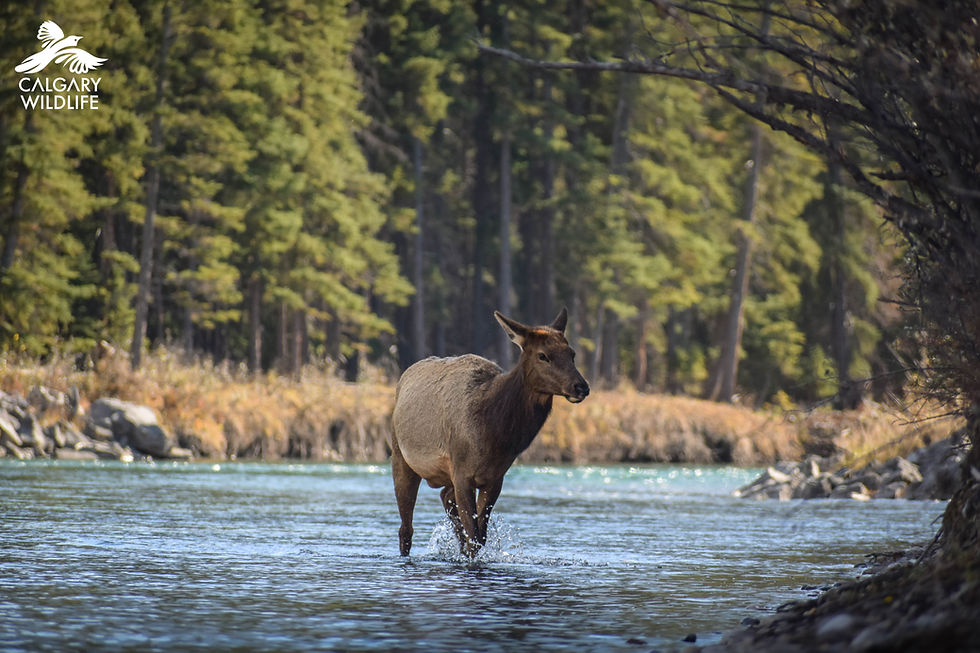
A good rule to remember is to let the animal's behaviour guide you. If an animal stops eating, changes direction, stares at you, repeatedly raises its head, vocalises, or moves away in response to your presence, you're too close.
Instead, enjoy wildlife from a respectful distance. Binoculars, spotting scopes, or your phone's zoom feature allow you to observe natural behaviours without disturbing the animal.
Alberta Parks recommend staying at least 30 metres away from large animals such as deer, elk and moose, and at least 100 metres away from predators including bears, wolves, coyotes and cougars. These are just minimum guidelines, and even more space is better. If an animal chooses to come closer, calmly give it room to move away and never block its path.
Keep pets from becoming part of the problem
Our pets are family members, but to wildlife they can appear very differently.
Even a friendly, well-trained dog may be viewed as a predator by nesting birds, deer with young fawns, or other wildlife protecting their offspring. Dogs that chase wildlife can separate parents from their young, destroy nests hidden in tall grass, or trigger defensive behaviour from larger animals.

Keeping dogs leashed where required, and under close control everywhere else, is one of the simplest ways to prevent unnecessary conflicts. If you notice wildlife nearby, create additional distance rather than allowing your dog to investigate.
Cleaning up after pets is equally important. Pet waste can introduce diseases and parasites into natural areas and contaminate waterways used by wildlife.
Cats deserve special consideration as well. Although many people think of outdoor cats as simply exploring, they are highly effective predators. Across Canada, free-roaming domestic cats kill millions of birds each year, along with countless small mammals, reptiles and amphibians. Keeping cats indoors or providing secure outdoor enclosures, sometimes called "catios," protects both wildlife and pets from injury, disease and traffic.
Never feed wildlife
One of the most important principles of wildlife conservation is simple: wild animals should find their own food.
While tossing bread to ducks or leaving snacks for squirrels may seem harmless, feeding wildlife can create long-term problems. Animals that become accustomed to human food may lose their natural fear of people, become dependent on unnatural food sources, and increasingly venture into neighbourhoods, roadsides, and campgrounds in search of easy meals. Human food can also be dangerous or toxic to animals, and can lead to developmental abnormalities and nutrient deficiencies.

These situations often lead to dangerous conflicts. Animals may become aggressive around food, damage property, or be struck by vehicles. In some cases, wildlife that repeatedly seeks food around people must be relocated or euthanised for public safety.
Food attractants aren't limited to intentional feeding. Common backyard attractants include:
Pet food left outdoors
Overflowing garbage or compost bins
Fallen fruit beneath trees
Dirty barbecue grills
Bird feeders during periods of high bear activity
Removing these food sources helps wildlife remain wild and reduces conflicts before they begin.
Baby animals are rarely abandoned
Every spring and summer, Calgary Wildlife receives countless calls about baby animals that appear to have been abandoned. In reality, many of these young animals are exactly where they should be.
Species such as white-tailed deer, mule deer and white-tailed prairie hares often leave their young alone for hours at a time while they forage. The babies remain quiet and still, relying on camouflage rather than their parents' constant presence to stay safe.
Similarly, many young birds spend several days on the ground after leaving the nest. These fledglings have feathers, can hop or flutter, and continue to receive food and protection from their parents as they learn to fly.

Unless a young animal is obviously injured, continuously crying for many hours, covered in flies, or you know the parent has died, the best thing you can do is leave it where it is.
If you're uncertain whether an animal truly needs help, observe from a distance and contact Calgary Wildlife or another licensed wildlife rehabilitator before intervening. Removing healthy young animals from the wild often decreases their chances of survival.
Respect nesting season
Summer is nesting season for hundreds of bird species across Southern Alberta.
While some birds nest high in trees, many choose surprisingly vulnerable locations, including shrubs, flower beds, grassy fields, rooftops and even building ledges. It's easy to accidentally disturb a nest while gardening, pruning trees, mowing the lawn or completing outdoor projects.
Whenever possible, postpone major landscaping work if you discover an active nest. Giving birds a few weeks to finish raising their young can make a significant difference to their breeding success.

If you encounter a feathered young bird on the ground, don't assume it needs rescuing. Fledglings naturally leave the nest before becoming strong fliers. Their parents are usually nearby, watching carefully and returning frequently to feed them.
If you find a nestling, a very young bird with few or no feathers, that has fallen from its nest, this is an animal that does need help. Look for the nest above you; if it can be safely reached, gently place the bird back inside. Contrary to popular myth, parent birds will not reject their babies because a person touched them. After returning the bird, leave the area so the parents feel comfortable returning.
Practising wildlife etiquette in the mountains
Southern Alberta's mountain parks provide some of Canada's best opportunities to experience wildlife. They also require extra preparation and awareness.
Many animals use the same trails, valleys and waterways that people do. Making your presence known helps avoid surprising wildlife at close range.
When hiking, travel in groups whenever possible and make regular noise by talking with companions, especially in areas with limited visibility. Carry bear spray where recommended, keep it easily accessible, not buried in your backpack, and familiarise yourself with how to use it before heading onto the trail.
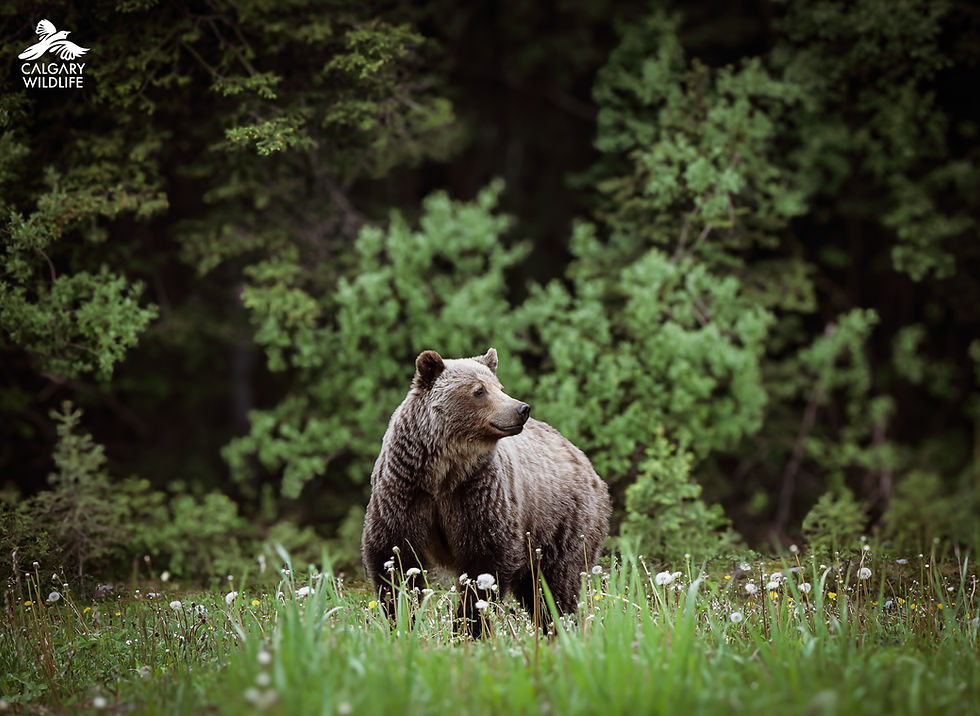
If wildlife is using the trail ahead, be patient. Rather than attempting to squeeze past or encourage the animal to move, give it space and wait for it to leave on its own. Every wild animal is simply trying to travel, feed or care for its young.
Respecting closures and wildlife advisories is equally important. Temporary trail closures often protect sensitive habitat or reduce the likelihood of dangerous encounters during periods of increased wildlife activity.
Make your backyard part of the solution
Wildlife habitat doesn't end at the city limits. Many Calgary neighbourhoods overlap with natural areas, meaning backyards can either support wildlife or unintentionally create conflict.
Fortunately, small changes around your home can make a meaningful difference.

Consider these wildlife-friendly practices:
Secure garbage and compost bins.
Harvest ripe fruit promptly and remove fallen fruit from the ground.
Bring pet food indoors immediately after feeding.
Keep cats indoors, and dogs leashed when outside.
Plant native flowers, shrubs and trees that provide food and shelter for pollinators and songbirds.
Clean bird baths regularly and replace the water every few days to reduce disease transmission.
These simple actions help create healthier neighbourhoods for wildlife while reducing unwanted visits from larger animals.
Know when wildlife actually needs help
One of the hardest parts of wildlife rehabilitation is knowing when not to intervene.
Many healthy wild animals appear vulnerable simply because people aren't familiar with their natural behaviours. A rabbit sitting quietly beneath a shrub, a fawn lying alone in long grass or a fledgling hopping across a lawn may all be behaving exactly as nature intended.
However, some situations do require assistance.
Contact Calgary Wildlife or your nearest licensed wildlife rehabilitator if an animal:
Has obvious injuries such as broken bones or bleeding.
Has been caught by a cat or dog.
Is trapped or entangled.
Appears weak, unable to stand or unable to fly.
Is in immediate danger from traffic or another hazard.
Whenever possible, speak with a rehabilitator before attempting a rescue. They can help determine whether intervention is actually needed and explain the safest next steps for both you and the animal.
Sharing the season
Every summer offers countless opportunities to enjoy the incredible wildlife that makes Southern Alberta unique. By giving wildlife space, removing food attractants, keeping pets under control and knowing when an animal truly needs help, each of us can play an important role in protecting Alberta's wildlife.
Good wildlife etiquette isn't complicated. More often than not, it's simply choosing to observe rather than interfere.
For assistance with injured and orphaned wildlife, please contact the Calgary Wildlife Rehabilitation Society at 403-214-1312.
References
Calgary Wildlife Rehabilitation Society. (n.d.). Finding injured or orphaned wildlife. Retrieved June 30, 2026, from https://www.calgarywildlife.org/wildlife-info/finding-wildlife
Calgary Wildlife Rehabilitation Society. (n.d.). Living with mammals. Retrieved June 30, 2026, from https://www.calgarywildlife.org/mammals
Calgary Wildlife Rehabilitation Society. (n.d.). Living with predators. Retrieved June 30, 2026, from https://www.calgarywildlife.org/predators
Calgary Wildlife Rehabilitation Society. (n.d.). Living with wildlife. Retrieved June 30, 2026, from https://www.calgarywildlife.org/living-with-wildlife
City of Calgary. (n.d.). Be BearSmart. Retrieved June 30, 2026, from https://www.calgary.ca/waste/residential/be-bear-smart.html
City of Calgary. (n.d.). Report injured wildlife. Retrieved June 30, 2026, from https://www.calgary.ca/parks/wildlife/report-injured-wildlife.html
City of Calgary. (n.d.). Wild animals in Calgary's natural areas. Retrieved June 30, 2026, from https://www.calgary.ca/parks/wildlife/animals.html
City of Calgary. (n.d.). Wildlife and you. Retrieved June 30, 2026, from https://www.calgary.ca/parks/wildlife/living-together.html
Town of Banff. (n.d.). Wildlife habitat. Retrieved June 30, 2026, from https://www.banff.ca/1011/Wildlife-Habitat
University of Calgary Faculty of Veterinary Medicine. (n.d.). Wildlife. Retrieved June 30, 2026, from https://vet.ucalgary.ca/summercamps/animal-interactions/friday/wildlife


