
Patient Update: Great Horned Owl Beak Fracture

This summer, our team cared for a young Great Horned Owl who arrived with a serious injury to the face and upper beak. The owl was found north of High River and brought to Calgary Wildlife for care. When the owl arrived, it was immediately clear that something was very wrong. The keratin covering the upper part of the beak, called the rhinotheca, had cracked near the soft tissue at the base. There was blood in the mouth and nasal cavity, and the area around the beak was swollen and painful. The owl was also thin and mildly dehydrated, signs it had been struggling for some time before being found.
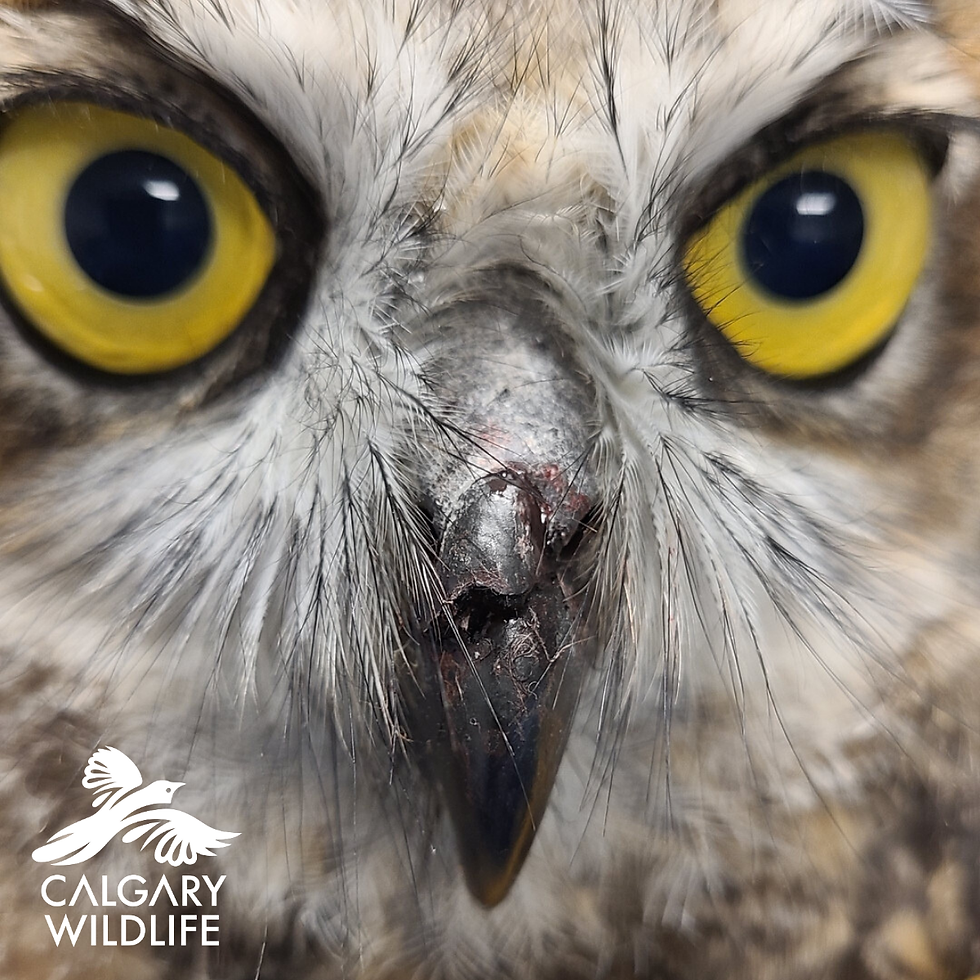
The beak is absolutely essential for an owl’s survival. A Great Horned Owl relies on it to tear prey into manageable pieces, but also to groom feathers, feed efficiently, and interact with the environment. A damaged beak can prevent an owl from eating properly, which can lead to weakness and starvation. Because this young owl also showed mild neurological symptoms, likely from a hard impact, the situation was especially urgent.
Shortly after admission, the owl underwent a careful beak repair. Under anesthesia, the injured keratin was cleaned and thin metal supports were attached along the top and sides of the upper beak. These acted like a temporary cast that held everything stable while new keratin slowly grew in beneath them. The supports would naturally fall away once the beak had regrown enough strength. After the procedure, the owl received medication for pain, inflammation, and infection control and was kept in a quiet space to begin healing.

Over the next several weeks, the owl made steady progress. As strength returned, the owl moved from indoor housing to outdoor enclosures, gradually working into larger flight pens. Each step gave more room to fly, exercise wings, and rebuild the stamina needed for life in the wild. The beak continued to heal well, with the cracked keratin becoming stronger and more stable as the weeks went on. The owl gained weight, began hunting practice foods confidently, and behaved appropriately for a young Great Horned Owl.
Partway through the recovery, staff noticed a small new wound near the base of the beak, likely from bumping the healing area during feeding or activity. With a short course of medication and close monitoring, the wound resolved quickly and the owl was able to continue rehabilitation without delay.

After 71 days in care, the owl met all the criteria for release. It demonstrated strong, confident flight and had a fully functional beak capable of handling the demands of hunting and feeding. With strength restored and injuries healed, the owl was returned to the wild in mid-September.
Many of the injuries we see in owls are the result of their natural behaviour overlapping with human-made risks. One of the most common dangers is vehicle collisions. The edges of roads often attract rodents that feed on grains, grass seed, or litter, and owls follow their prey. This means they may swoop low over the ground or sit on fence posts and roadside signs, especially at dawn and dusk when both rodents and many owl species are most active. Slowing down during these times greatly reduces the chance of hitting an owl that is hunting near the shoulder.
Window strikes are another major cause of injury. Clear or reflective glass can look like open sky or habitat, and even strong, healthy birds can collide with it at full speed. Many birds fly off after the impact but still suffer internal injuries that can be fatal hours or days later. Adding window decals or patterned tape spaced closely together can help birds recognize the glass as a barrier and stop them before they strike.
Simple steps like these make a meaningful difference. They help keep owls safe in the places where their habitat overlaps with ours and reduce the number of birds that need emergency care each year. By taking small actions in our homes and communities, we give wildlife a better chance to thrive.
For assistance with injured and orphaned wildlife, please contact the Calgary Wildlife Rehabilitation Society at 403-214-1312.


